Case study 01 / Search & discovery
The SEO Transformation of Levy’s Fine Jewelry
Jump to section
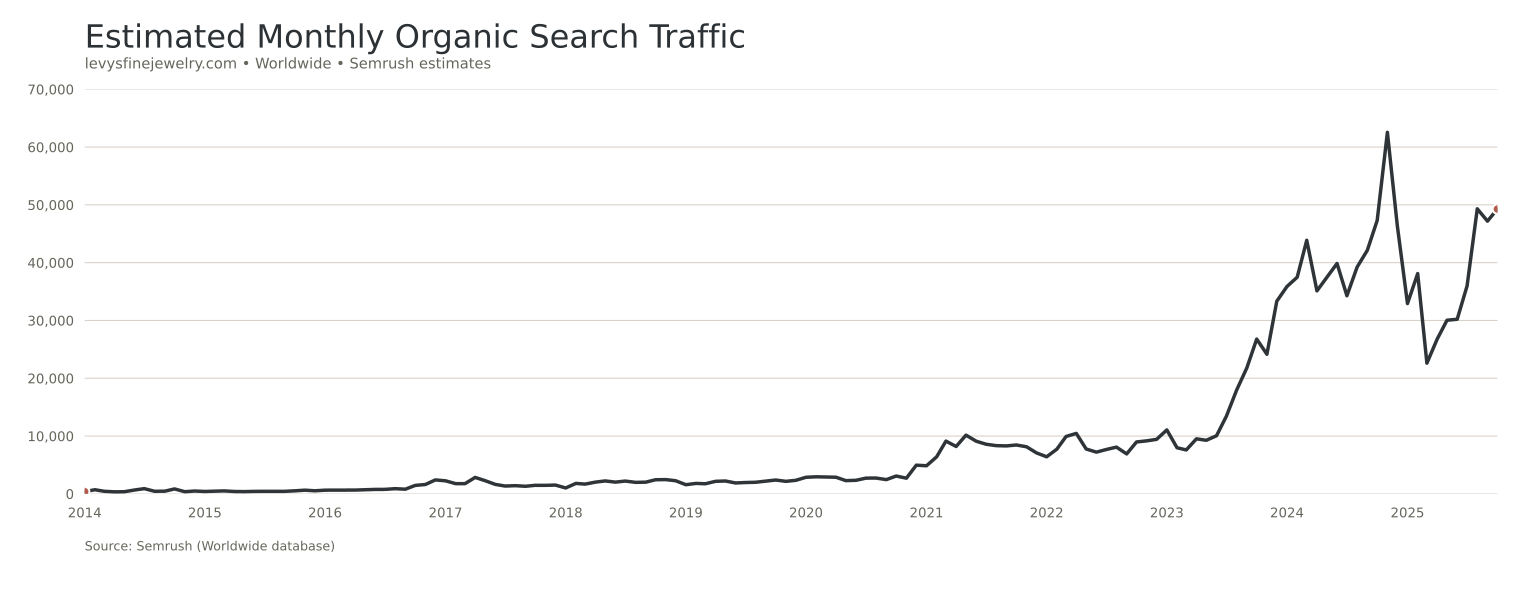
How I turned a brick and mortar jewelry store with fewer than 1,000 estimated monthly organic visits into a nationally recognized online brand consistently attracting more than 30–40k estimated organic visits a month.
Levy’s Fine Jewelry has been in business since 1922. Starting out as a pawnshop, it transitioned into an established retail jeweler by the late 1990s and early 2000s. That old pawnshop mentality provided a significant advantage compared with many jewelry stores: an established reputation for buying from the general public allowed for higher margins on modern pieces and offered an opportunity to stock one-of-a-kind antique and vintage jewelry.
By the time I arrived in 2013, the inventory was substantial, around 6,000 to 7,000 pieces, and it changed constantly. This provided a unique opportunity to expand into markets outside Birmingham. Recognizing that opportunity and transitioning a brick and mortar business to the digital world was a separate challenge.
Over the following years, I worked on the website, learned about jewelry and how art history influenced its design, developed original content, taught myself how to use a camera and achieve success on social media, and learned the retail business from the sales floor. By early 2023, I had a much better understanding of both the opportunities and the limitations of what we had built, and the social media strategy had become sustainable. This is the point where I began giving organic search the attention it deserved.
Making the Inventory Usable
When I started, Levy’s had a website, but did not have an established ecommerce business.
We rebuilt the website during my early years and completed a second redesign in 2019, when we launched the Shopify version that is still in use today. Working with outside developers and an integration provider, we attempted to synchronize the site with The Edge, the point of sale system used in the store. The intention was straightforward: when a piece arrived, sold, or changed, the website should reflect the same information. That was the only logical, sustainable way to handle an online store with that many products.
The implementation was not straightforward. We had thousands of individual items and software that did not always want to cooperate with the systems we were trying to connect. Around 2020, we finally reached a point where most changes appeared online on roughly a daily basis, although occasional delays still stretched to 24 or 48 hours.
Why I Didn’t Concentrate on SEO Sooner
For much of the period between 2013 and 2023, working with customers occupied the majority of my time, and with limited resources, social media was my principal marketing priority. Instagram was relatively new at the time, and the most significant marketing advantage I saw was an opportunity to learn how to stand out on an exciting new platform. That story is a separate case study.
That decision did not mean I stopped improving the website or writing. The historical content that JCK recognized in 2015 was written during the early part of this period, and the site continued developing. But with my time divided across so many responsibilities, it was impossible to treat everything as the top priority.
By 2023, the social media process had become more repeatable. I could finally give organic search sustained time and attention. I began in March, prioritizing relevant editorial exposure and backlinks while continuing to improve the website’s commercial architecture and technical experience.
The intensive SEO work did not begin on a blank website. It was built on years of learning what our customers wanted, what the store could offer, and which parts of the online experience had been unnecessarily difficult.
Sell People What They Actively Want to Buy
One of the most valuable things I learned from working the sales floor was how differently customers think about jewelry from the people who classify it.
Take engagement rings. The jewelry trade has perfectly sensible categories for rings, but a customer does not need to obey them. I sold antique dinner rings as engagement rings. I sold sapphire rings, ruby rings, and wide bands for the same purpose. If somebody chooses a ring to represent an engagement, it becomes an engagement ring. Neither the piece nor the customer is especially concerned with what category the ring originally was filed under in our inventory system.
When I built out the collections online, I researched the keywords people were using, weighed their commercial importance, and compared them with the merchandise we actually owned. Some shoppers wanted a conventional solitaire. Others wanted a unique ring, a halo setting, a particular color of gold, or something inspired by nature. Rather than forcing every piece into a single category, I used product attributes and tags in our point of sale system to let suitable rings appear in several relevant collections.
It was possible for one ring to belong to many collections without the categories being identical. A vintage sapphire ring with a floral engraving might be relevant to someone searching for sapphire engagement rings, nature inspired engagement rings, vintage rings, or a particular metal. That was not a trick to manufacture relevance. It reflects the thought process of how customers actually shop in the store.
I created and maintained collections around these searches, including subdivisions by style, metal, and stone. Each needed suitable inventory. Keeping the tags current required regular attention as new merchandise arrived. I also wrote unique, actionable title tags and meta descriptions for all of the collection pages throughout the site.
The title tags were intentionally straightforward. A person searching for a particular category should be able to recognize the right page without reading a sales pitch. With descriptions, I gave more thought to the question a searcher was asking when they saw the result: Why should I click this one? A list of keywords does not answer that question.
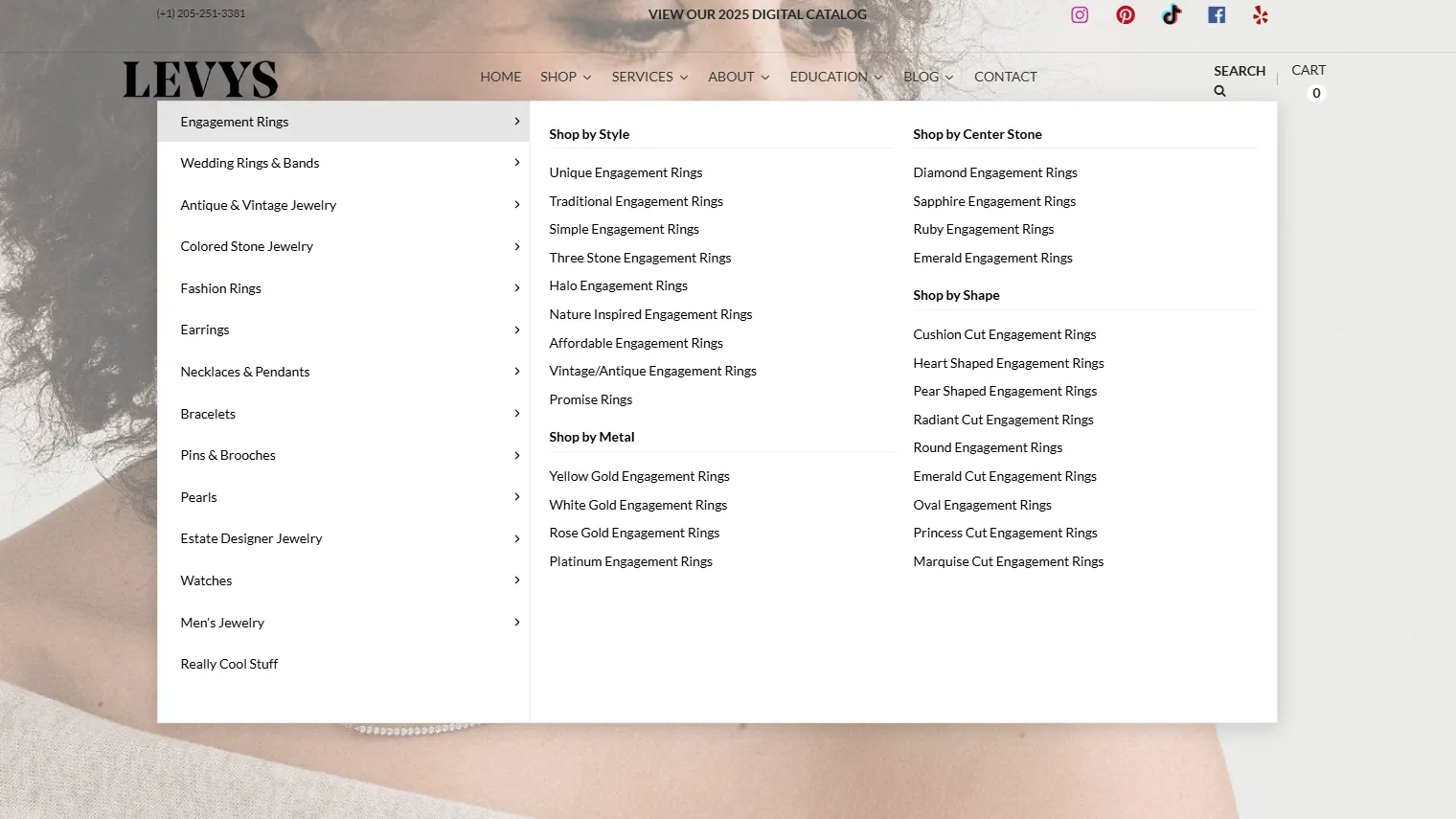
Once these unique categories existed and were populated with relevant products, I made a related change to the site’s navigation. The 2019 website’s shopping menu linked to 14 broad collection destinations, displayed in two columns. In 2023, I wanted important specialized pages available directly through the homepage navigation rather than relying on shoppers and search crawlers to work their way through broad collection pages first. I expanded the menu and interlinked relevant informational content with commercial collections elsewhere on the site. This added up to a major overhaul in navigation.
Internal links help to guide people through the site, and they help search engines understand how its pages relate to one another. My intention was to make the pages we had good reason to value easier to discover, while giving their relationship to the broader website a more deliberate structure.
The Required Technical Work
I have always viewed much of technical SEO as a required checklist rather than a special accomplishment. If a website is preventing search engines from accessing its important pages, the first job is to stop doing that. The interesting observations come after the basic requirements have been met.
Structured data was important to me from the beginning. I exclusively worked with developers who understood schema and ecommerce search requirements before they started building, rather than treating those things as optional additions afterward. Many modern Shopify themes now include structured data as standard, but I wanted to ensure it was handled properly in our 2019 redesign.
The most persistent technical work during the focused SEO period involved site performance. Jewelry websites are naturally image heavy. Ours also had several homepage sliders and substantial content below them. We worked on image compression and sizing, lazy loading, prioritizing the first visible images, deferring later slides, reducing unnecessary scripts and styles, improving theme behavior, and using a content delivery network.
I used PageSpeed Insights as a measurement metric and repeatedly tested the website myself after clearing my browser cache. Faster loading was a green flag for search engines, but more importantly, it greatly improved the customer experience.
The same reasoning applied to photography. I pushed to improve poor product images wherever I could, but I did not take most of the website photographs. Some images I would have replaced remained in use. A pearl strand may not look especially different from another pearl strand in a thumbnail, but to somebody considering spending over a thousand dollars, small details can “kill the vibe.”
Creating Research Content People Actually Enjoy Reading
Long before the concentrated SEO campaign, I believed Levy’s had an obligation to become a source of jewelry history knowledge. Showcasing our depth of knowledge and passion on the subject would make customers more comfortable trusting our interpretation of our products.
Too much of the content featured on jewelers’ websites is basically identical to what other jewelers publish. My preference was to tell the story of a technique or period in a way that explained why trends developed, rather than simply listing characteristics and dates. Someone who wasn’t already an expert on the topic should genuinely enjoy the content and finish the article knowing something worth remembering.
In July 2015, JCK included Levy’s in an article about the value of original editorial content, specifically recognizing the historical material I had been producing. It was early evidence that the writing could interest people beyond our existing customers.
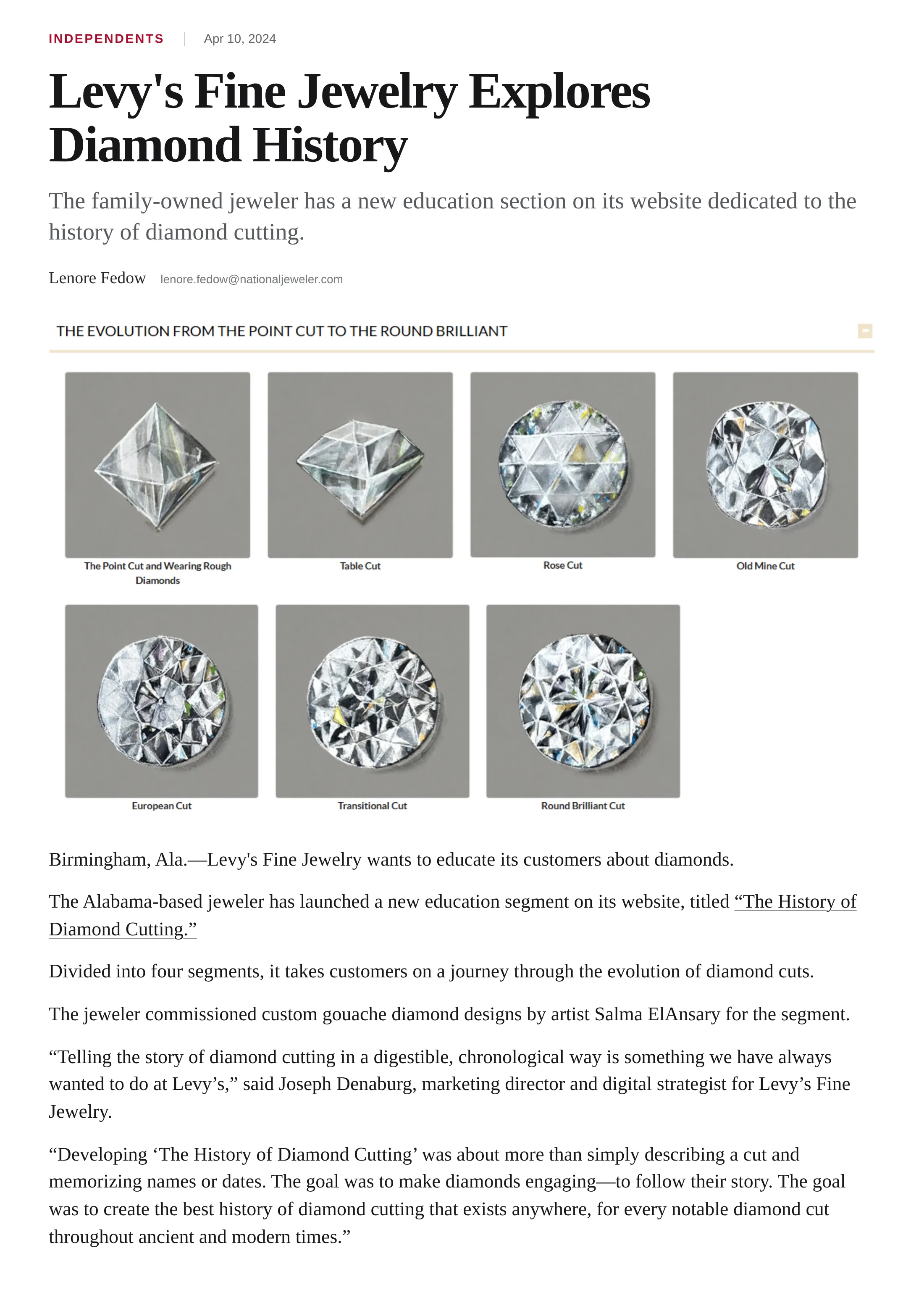
The most demanding research project came later: a comprehensive history of diamond cutting. I originally commissioned someone else to help write it, but the material did not reach the standard I envisioned. I ended up spending roughly eighteen months fact checking and rewriting the work myself, while continuing my other responsibilities at the store. Near the end, I reserved two or three hours a day to finish it. I tracked down relevant, license-free historical images and worked with an artist, Salma ElAnsary, to commission original illustrations of the diamond cuts.
The finished library followed the development of diamond cutting chronologically, with an emphasis on the people, practical limitations, and decisions that shaped the stones we recognize today. National Jeweler covered its launch in April 2024. Other industry attention followed.
Here is where things get more complicated. Many of those educational pages did not attract as much organic search traffic as I expected.
In spite of this, the project was still a valuable resource. While many of the pages did not rank particularly well, they attracted attention from prominent jewelry editors and customers with a deep appreciation for history and storytelling. The knowledge I gained became a staple of how I educated customers, and the research opened doors with editors who would later be interested in publishing or publicly recognizing other work.
A few months later, I wrote another piece, Mastering Metal - A History of Filigree in Jewelry. With the help of my talented PR colleague Olga, it appeared in Gem-A’s Gems & Jewellery. I later shared it on Levy’s blog. It took several months before I could republish it there, but being able to point readers to the original article in a respected industry publication more than justified the delay.
Even from an SEO perspective, there is no sensible reason to judge every piece of content solely by how many search visits it receives. Sometimes its greatest value is in giving knowledgeable people a reason to take you seriously. Over time, that kind of recognition creates opportunities that would otherwise be difficult to obtain.
True Authority Is Built Like a House, One Brick at a Time
By March 2023, I had become convinced that Levy’s needed stronger and more consistent recognition from relevant websites and publications. We were competing with businesses that had spent years doing an excellent job of establishing themselves online. A good collection page, no matter how carefully organized, could not be assumed to outrank all of them.
I worked with a specialized performance-based digital PR team to reach established publications and later with a traditional jewelry PR specialist who had relationships throughout the trade. The arrangements were different, but the underlying editorial judgment was similar. I targeted audiences that were real, publications that had something useful to say, and coverage that belonged in the context of the people reading it.
I evaluated potential publications for relevance, readership, and the quality of their existing work. Domain authority metrics were useful filters, but they were never enough to make the decision. An impressive number beside a website’s name does not tell you whether anyone actually respects it.
I was equally deliberate about where I wanted that attention directed. Not every page has the ability to rank for your desired keywords. A collection with a substantial amount of desirable inventory and strong commercial search demand provides a competitive advantage that aligns with the characteristics of a page Google would want to promote to its users.
The antique and vintage jewelry collection became a priority, as did other important categories including ruby rings, sapphire rings, and pocket watches. We also continued promoting original historical research. The objective was consistency. I did not attempt to assign an exact ranking gain or dollar value to each article or link. SEO is a moving target, and the most reliable strategy is to constantly improve the customer experience and attract more external attention at every opportunity.
When I began working with a dedicated jewelry PR specialist in April 2024, our strategy expanded to include monthly press releases, requests for product photography, seasonal editorial opportunities, and introductions for longer original articles. A writer preparing a feature on platinum bands or Halloween jewelry might need good examples immediately. We needed to have material ready when those opportunities arose.
This is one reason I remain skeptical of relying exclusively on automated link outreach. Software can find prospects and send messages. Developing a relationship in which an editor knows you can deliver unusual merchandise, reliable information, and strong photography is a different kind of work. It may lead to an article today and to another opportunity six months later that no automated campaign would have been able to secure. Volume and AI cannot replace real, human relationships.
What Improved, and What Didn’t
According to Semrush, Levy’s estimated monthly organic search traffic increased from 7,597 in March 2023 to 49,271 in October 2025, peaking at 62,540 estimated monthly visits in November 2024.
Performance varied considerably by collection. Antique and vintage jewelry remained one of the most visible areas of the site, with Art Deco jewelry and pocket watches developing meaningful search audiences. Several of the newer engagement ring collections, however, never produced the traffic I expected. I remember some briefly reaching positions eight through twelve in Google, while unique engagement rings reached roughly positions 25 through 32. Those positions did not become self-sustaining.
I suspect the combination of strong competition, relatively new collection pages, and insufficient time to continue developing their authority mattered. It’s impossible for anyone outside Google’s ranking systems to determine with certainty which explanation is correct.
An improved menu and a well-chosen collection name did not guarantee competitive rankings. Nor did one successful category mean every adjacent category would follow it onto the first page. Each category needed consistent attention, and every search market had its own competitors and expectations.
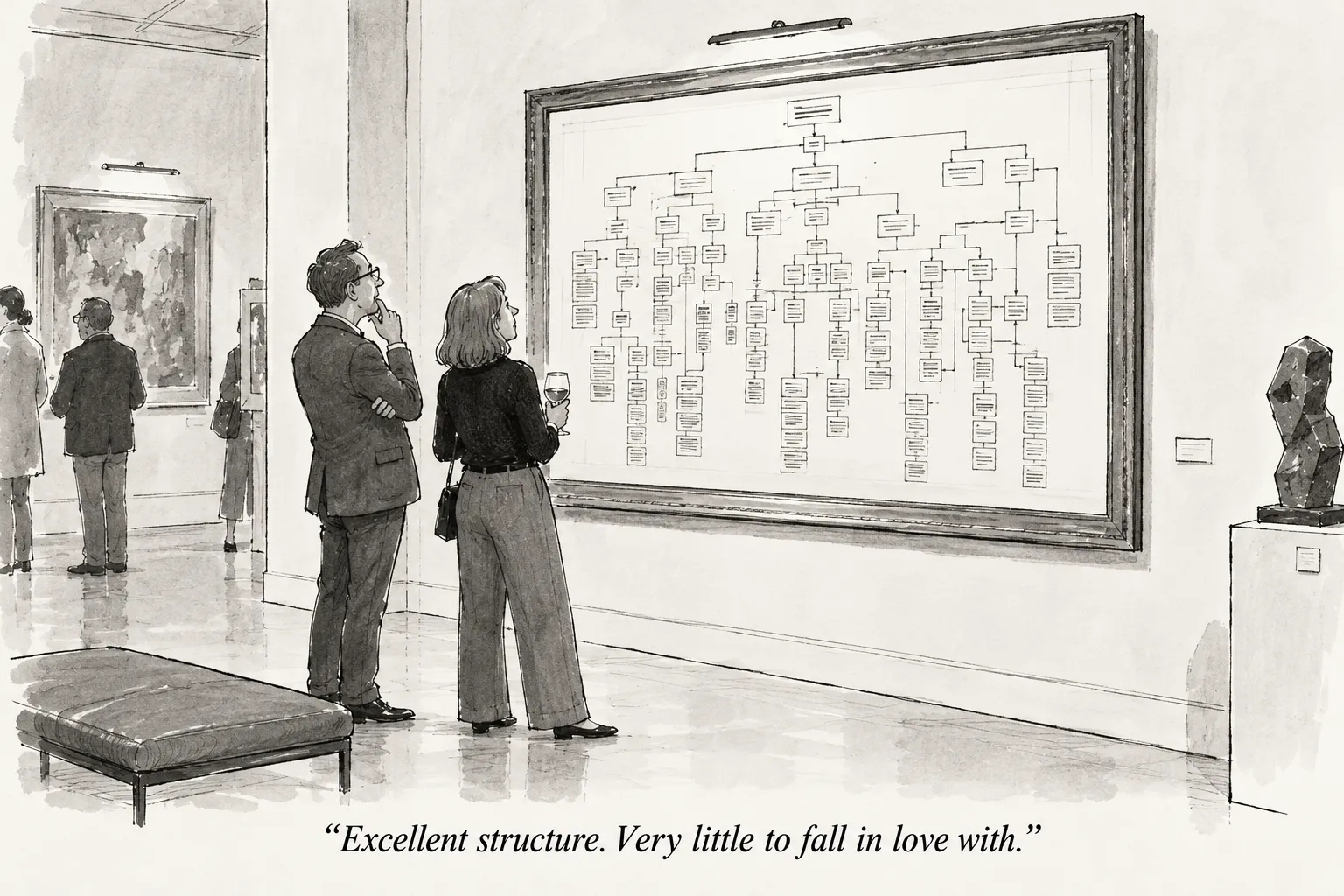
No One Ever Fell in Love With a Sitemap
Perfecting the technical side of SEO is a requirement. Once a site is well designed and organized, convincing other people and publications to care about its products and content can be the difference between modest and massive success.
A website cannot invent a meaningful competitive advantage for a business that doesn’t have one. Understanding your business from a creative (and fun) perspective can open up opportunities to identify what your edge is and how to make the most of it.
It’s impossible to precisely identify how much each task contributed to the final rankings. Google’s systems are more complicated than that.
What remains consistent is the thought process behind why I made those decisions, what they required, where they fell short, where they improved user experience, and how they attracted real external attention. That is considerably more useful than a list of fixes followed by a large traffic number.
Start a conversation
What are you trying to make better?
Tell me a little about your business and what you’re trying to accomplish.
Get in touch